
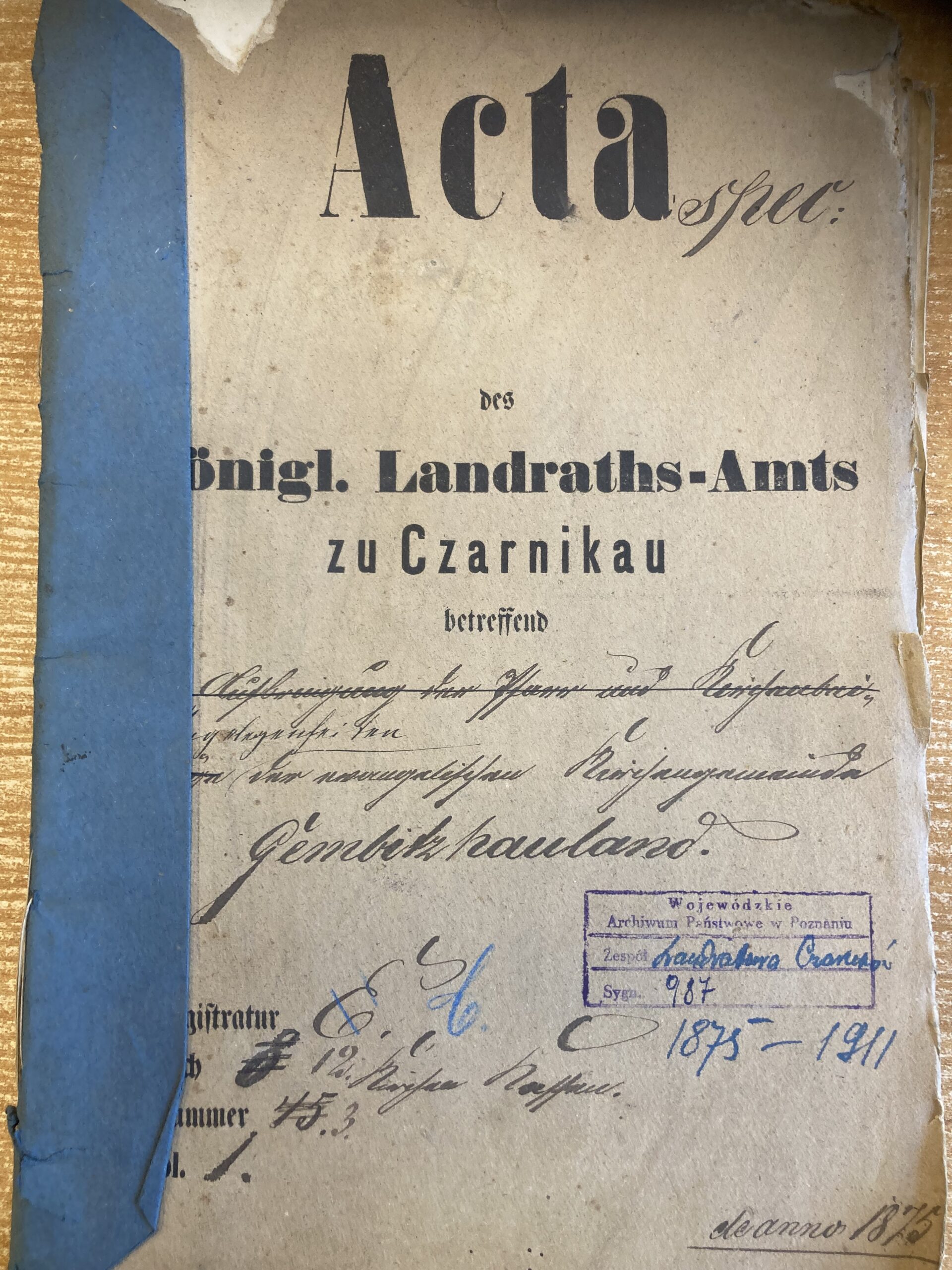
Affairs of the Protestant church community of Gembitz-Hauland
https://www.szukajwarchiwach.gov.pl/en/jednostka/-/jednostka/1264006
This set of records which are available at the archives in Poznan deals primarily with the financial support of the church of which the communities of Gembitzhauland, Polajewohauland, Niewiemko and Glasshütte were members.
The records are useful to determine the wealth and status of each family within the community. It is useful to note that generally the farmers in Polajewo Hauland were the taxed the highest compared to the other communities and the farmers in Glasshütte and Niewiemko were taxed the lowest reflecting the quality of the farmland. Visiting each of these communities today you will find a stark contrast. The land in Polajewice is still farmed while the land in Niewiemko is now a national forest.
A second important use of these records is that they are organized by tax number of each property. This is useful for establishing locations of the properties. For Gembitzhauland, except for a few properties added later, these records follow the original plat of the community in 1826. The same can be said for Polajewohauland.
August 31, 1874
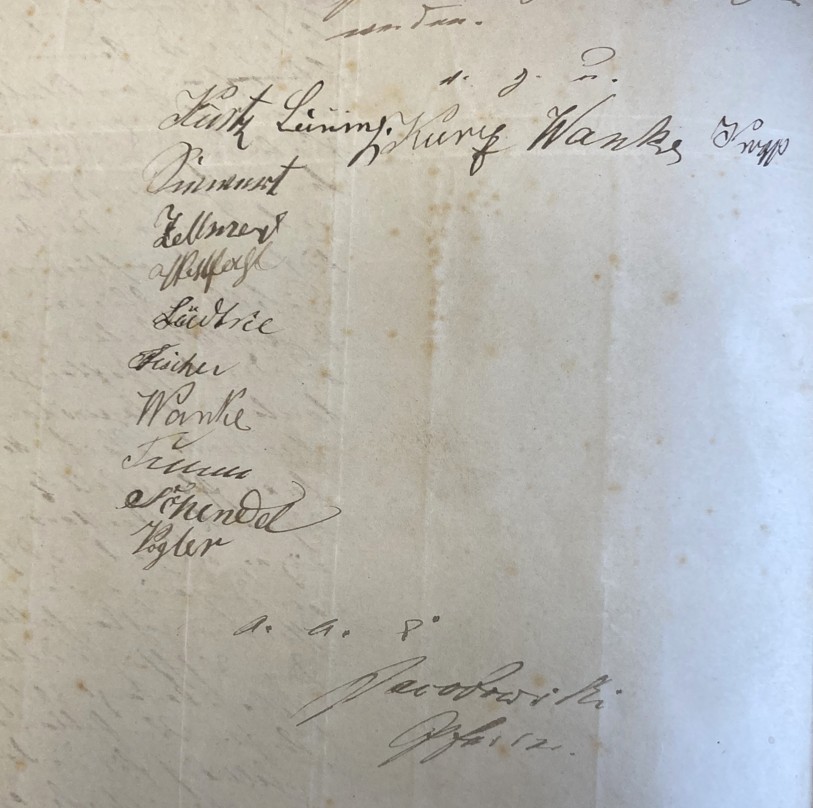
The elders of the church set the tax for the support of the church based upon the klassensteuer (see an explanation of this Class Tax below) reach resident owed.
Klassensteuer
Klassensteuer was a form of taxation that was levied not based on income or wealth but rather external characteristics. The population was grouped. Each group was taxed at the same rate. Within the Gembitzhauland parish the residents were grouped as farmers, cottagers, and day laborers with subgroups within the farmer group likely due to the size of their holdings. The Klassensteuer was originally introduced in Prussia in 1820. At that time the people were taxed in four groups: the wealthy inhabitants, wealthy landowners and merchants, farmers, and days laborers and servants. In 1851, an income tax was introduced in Prussia for all persons with an income of more than 1000 thalers, while klassensteuer remained in place for those earning less. In 1873, the government attempted to reform the klassensteuer so that the tax was closer to an income tax by trying to determine the real income of the taxpayer. This explains the different tax levies for the farmers in the Gembitzhauland parish.